

I am typically a newsletter editor’s nightmare — waiting until the last minute to turn in my article. There is a reason for that. Invariably, close to deadline something will happen which crystalizes for me what I want to say. So it is with this issue.
Jennie Fitzkee, blogger extraordinaire and a frequent contributor to this newsletter (see her wonderful article about visiting E.B. White’s farm in this issue) recently sent two posts which dealt with book selection and the “best words from a child.”
The former touched on the most frequently asked question we receive from our volunteers, “What book is best?” To ask me (or any reader!) that question is almost like asking a parent to pick a favorite child — can’t be done! Nevertheless, we know it is an important question that needs to be addressed and this issue is chock full of suggestions from our conference attendees. (In Jennie’s own classroom the early favorite this year is Mo Willems’ Knuffle Bunny.) You can also find links to the growing list of favorite titles submitted by Read Aloud volunteers over the years at readaloudwestvirginia.org/book-lists-and-reviews/.
The other post referenced a kindergarten student who, after observing the impressive display of books in Jennie’s room, said, “Jennie, tell me all the books.”
That made me think of our volunteers beginning another school year of “telling” (aka reading) so many books to children and introducing them to new words, new worlds and new authors. Those thoughts led in turn to an article I read this week about one of my very special heroes, Fred Rogers. As you probably know this is the 50th anniversary of “Mr. Rogers Neighborhood,” and he has been the subject of many articles and honors, as well as a commemorative stamp and several documentaries.
That documentary seemed to make everyone leaving the theatre walk a little straighter and smile a little brighter. One of the most touching moments was when those remembering Mr. Rogers were asked to do something he had asked numerous audiences from Congressional committees to college graduates to do. He called it an “invisible gift” as he asked them to take one silent moment to “think about those who have helped you become who you are today.”
It made me think of those who are serving as that person for a child or children in our state now, guiding the next generation. When you read to a child as a volunteer, parent, grandparent, guardian or friend you are adding to who that child will become.
Those of you who support our organization and enable us to offer our programs are also fulfilling that role. You will read about some who are doing that (conferees; Dan Foster). Others may remain anonymous, but it does not diminish the incredibly important role they play. As we start the new school year, know that when you introduce a child to the pleasure of reading you are providing an incredibly important gift.
Also know we are always looking for additional volunteers to join us in our efforts.
— Mary Kay Bond, Executive Director, Read Aloud West Virginia


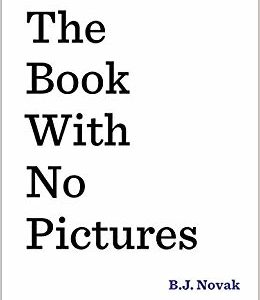
 1. The Book with No Pictures by B.J. Novak. You may know the author better as Ryan from the TV show “The Office.” Don’t be daunted by the hilarious video online of Novak reading it to a school in New York. But be warned. Here’s a sample: “Everything the words say, the person reading the book has to say.
 2. The Big Jump and Other Stories by Benjamin Elkin. This one, originally published in 1958, was recommended by Berkeley County volunteer Casey Wilson because it is one of his wife’s favorites. He read the first of the three stories in the book to a first-grade class, and then closed the book.
 3. Caps for Sale by Esphyr Slobodkina. Speaking of old-timers, this folktale was first published as the beloved picture book by an avant-garde artist in 1940. It has sold millions and makes a great board book because of the repetitive language suited to small children. If you read it, though, make sure you know what monkey noise you’re going to make when the time comes.
 5. Counting on Katherine: How Katherine Johnson Saved Apollo 13 by Helaine Becker and illustrated by Dow Phumiruk. This beautiful new picture book traces West Virginia’s recently discovered hero Katherine Johnson, of Greenbrier County, educated at West Virginia State University and WVU, who then worked quietly behind the scenes at NASA doing the math that made space travel possible. It’s aimed at younger students, but it has something to inform and inspire all ages.
 7. Cendrillon by Robert D. San Souci and illustrated by Brian Pinkney. This is another picture book that grows with the students. It’s the Cinderella story, so easily recognizable, but set in the French West Indies, with all the color, imagery and a peppering of French Creole language. Also, it is told from the point of view of the Fairy Godmother, or nannin’.
 8. Alvin Ho: Allergic to Girls, School and Other Scary Things by Lenore Look and illustrated by LeUyen Pham. A chapter book, this features second-grader Alvin Ho, aka his superhero alter-ego Firecracker Man, who does everything you would expect, except that as soon as he steps off the bus at school he can’t talk. The characters inspire laughs and compassion in listeners. It’s not too young for third grade, where students begged for the next one in the series.
 9. Monsters in West Virginia by Rosemary Ellen Guiley. There is something even more suspenseful about allegations of monsters and fantastic beasts just out of sight, if the places they were supposedly spotted are places you know — Grafton, Point Pleasant, Braxton County, for example. A good lure for older listeners.
 10. The Miraculous Journey of Edward Tulane by Kate DiCamillo. “I love the connections we can make between how the author explored different kinds of love, friendship, family love, betrayal, all of these rich ideas and plot twists and things that we can look at together when we read those books,” said Christy Schwartz, literacy specialist with the West Virginia Department of Education’s Campaign for Grade Level Reading.


